


You wake up with that familiar scratchy throat and immediately start running through your options. Tea with honey? Steam in the bathroom? Just push through? Most people want to handle a cold at home if they can—but it's hard to know which remedies are actually doing something and which ones are just comfort habits dressed up as medicine.
The honest answer: some natural approaches have real practical value, and some don't. Here are five that are genuinely worth trying when a cold or flu first hits—followed by a clear-eyed look at when it's time to stop improvising and reach for something stronger.
1. Hydration — And Not Just Water
When you're sick, your body loses fluids faster than usual—through fever sweating, a runny nose, and the general inflammation response. Staying well-hydrated helps thin mucus, keeps your throat from getting raw, and supports your immune system's basic functions.
Water is good. Warm liquids are often better. Broth, herbal teas, and warm water with lemon all help keep you hydrated while the warmth soothes irritated airways. The goal isn't a specific number of glasses—it's drinking consistently throughout the day, especially if you have a fever.
What to avoid: alcohol and excessive caffeine. Both are dehydrating, which is the opposite of what you need right now.
2. Steam Inhalation
Steam doesn't kill a virus. But it does something genuinely useful: it temporarily loosens congestion and makes it easier to breathe. If you've ever felt immediate (if brief) relief from a hot shower when you're stuffed up, that's why.
A simple way to do this at home is to lean over a bowl of hot water with a towel draped over your head, breathing slowly for several minutes. A warm shower works just as well. The relief won't last all day, but it can make the first part of your morning—or the hour before bed—significantly more comfortable.
A word of caution: the water doesn't need to be boiling. Steam from very hot water can irritate airways, so let it cool for a minute before you lean in.
3. Honey for a Sore Throat and Cough
Of all the natural remedies that get passed around, honey has some of the most consistent real-world support. It coats the throat, has a soothing effect on irritation, and has been studied specifically for its role in reducing cough frequency and severity in adults.
A spoonful on its own works. So does stirring it into warm tea or warm water with lemon. The key is using it regularly throughout the day, not just once before bed.
One firm note: honey should never be given to children under one year old. This is a well-established medical guideline, not a precaution to skip.
4. Saline Nasal Rinse
A saline rinse—whether a neti pot, a squeeze bottle, or a simple saline spray—physically flushes irritants, excess mucus, and debris from your nasal passages. It doesn't treat the virus, but it reduces congestion and can help prevent secondary sinus infections from developing.
This one tends to get skipped because it feels awkward. But people who actually stick with it during a cold consistently report faster congestion relief than those who don't. It's one of the few home remedies where the mechanism is straightforward and the benefit is direct.
Use distilled or previously boiled water if you're using a rinse device—never tap water directly. Saline sprays from a bottle are the simpler option if you want to skip the prep.
5. Prioritizing Rest — Actually Prioritizing It
This one sounds obvious, but most people don't actually do it. They rest a little, then catch up on emails, then stay up late, then wonder why they're still sick five days later.
Sleep is when your immune system does its most active repair work. Cutting sleep short—even by a couple of hours—measurably impairs your body's ability to fight infection. The most effective thing you can do when a cold hits is clear your schedule as much as possible for the first 48 hours and actually sleep.
That's not always possible. But it's worth treating rest as a treatment, not a luxury, especially early in an illness when your body has the best chance of keeping things mild.
When Natural Isn't Enough: The Case for OTC Cold and Flu Treatments
Home remedies are genuinely useful for managing mild symptoms and supporting recovery. They're not a replacement for medication when symptoms escalate.
Here's when it makes sense to reach for an OTC treatment instead of—or alongside—your home toolkit:
- Fever that's climbing or persistent. A low-grade fever is your immune system working. A high or prolonged fever is a different situation. OTC fever reducers exist for a reason.
- Congestion or sinus pressure that's keeping you from sleeping. Decongestants work differently than steam—they reduce swelling in nasal passages at a physiological level. When congestion is severe, that matters.
- A cough that's disrupting sleep or daily function. Honey helps with mild cough. A cough suppressant is a better tool when the cough is relentless.
- Body aches and headaches making it hard to rest. Pain is counterproductive when your goal is sleep and recovery. Pain relievers are a practical part of flu management, not a last resort.
- Symptoms lasting beyond 7-10 days or getting significantly worse. At that point, you may be dealing with a secondary infection (like sinusitis or bronchitis) that warrants a conversation with a healthcare provider—not more honey.
The natural-first approach is smart. But knowing when to step it up is just as important as knowing which remedies to try.
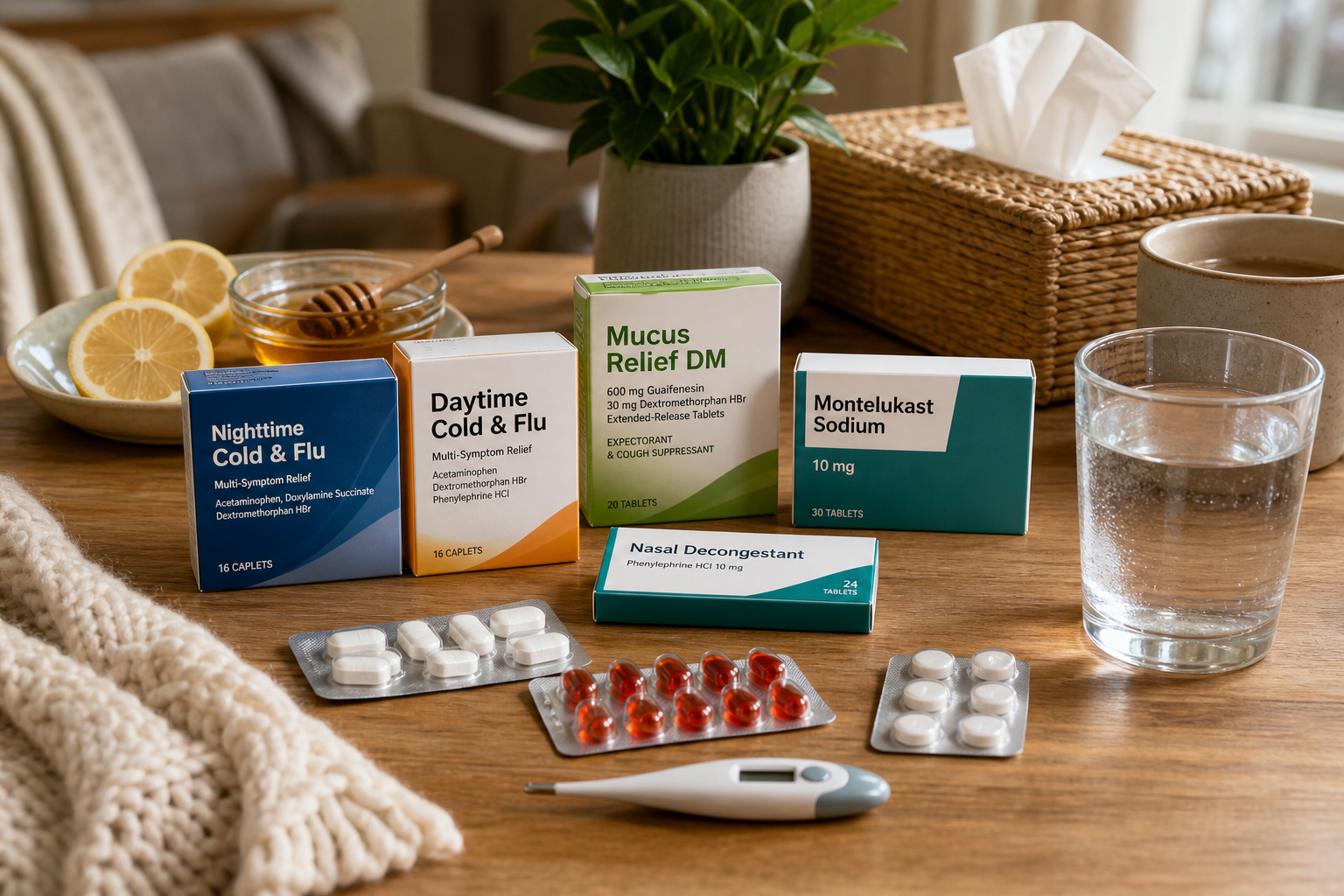
Medistoreweb carries a range of OTC cold and flu treatments alongside wellness essentials—so whether you're stocking up before cold season or mid-illness and realizing you need more than tea, everything ships free to your US address. And if you're building a more complete home health setup, the guide to building a home first aid kit is worth a read too.
Start with what you have at home. But keep your options open—and keep the right OTC products within reach for when the situation calls for them.
Browse Medistoreweb's Cold & Flu OTC selection—free shipping on every US order.
Frequently Asked Questions
Do natural remedies actually shorten how long a cold lasts?
Mostly, no—natural remedies like steam, saline rinse, and rest are best understood as symptom managers and recovery supporters, not virus-killers. They help you feel better and give your immune system the conditions it needs to work, but they don't significantly shorten the duration of a viral infection the way antiviral medications might for flu. The exception is rest: genuinely prioritizing sleep in the first 48 hours can make a real difference in how your body handles the illness.
Can I use OTC cold medicine and natural remedies at the same time?
Generally yes—things like hydration, honey, steam, and rest don't interact with OTC medications and can actually complement them. Just read OTC labels carefully, since some combination cold products already include multiple active ingredients (like a decongestant and a pain reliever together), and doubling up on the same ingredient can cause problems. When in doubt, ask your pharmacist.
How do I know if I have a cold or the flu?
The main practical difference is speed and severity. A cold usually comes on gradually with a sore throat, runny nose, and mild congestion. Flu tends to hit fast—often within hours—with a higher fever, significant body aches, fatigue, and sometimes a dry cough. If you're genuinely unsure and symptoms are severe, a rapid flu test (available at most pharmacies and clinics) can confirm it. That matters because antiviral flu medications work best when taken early.
When should a cold or flu prompt a visit to the doctor?
Most colds and flu cases resolve on their own without medical care. But you should contact a healthcare provider if you have a very high or prolonged fever, difficulty breathing or chest pain, symptoms that improve then suddenly worsen, or if you're in a higher-risk group (older adults, young children, people with chronic conditions like asthma or diabetes). Symptoms lasting more than 10 days without improvement are also worth getting checked out, as they may signal a secondary infection.