


You check your blood sugar after lunch, see a number that looks fine, and feel reassured. Then your next lab visit comes back with an A1C your doctor isn't happy about. If that scenario sounds familiar, you're not confused—you're just working with two different tools that measure two very different things.
This is one of the most common disconnects for people managing diabetes or prediabetes at home. A glucose monitor is genuinely useful. But it's easy to over-read a good single reading, under-react to a bad one, or miss what's actually happening in between. Before any of that makes sense, it helps to understand what each measurement is actually doing.
What a Blood Sugar Reading Actually Shows
When you prick your finger and check your glucose, you're getting a snapshot—literally that moment in time. Blood sugar is dynamic. It rises after you eat, dips when you're active, shifts with stress, sleep, illness, and even the time of day. A single reading is real data, but it's a single frame of a very long film.
That's not a flaw. It's just what the tool is built to do. The value of home monitoring comes from patterns, not individual numbers. A reading that looks high after a specific meal, consistently, is telling you something. A reading that spikes two hours after dinner every night is telling you something. One unexpected high on a stressful Tuesday? That's noise.
The mistake most people make early on is treating each reading as a verdict. It isn't. It's a data point.
What A1C Measures—and Why It's Different
A1C is a blood test done at a clinic or lab, typically every three months for people managing diabetes. It measures the percentage of hemoglobin in your red blood cells that has glucose attached to it. Because red blood cells live for roughly two to three months, A1C gives a rough average of your blood sugar over that whole period—not just the morning you walked in for the test.
This is why someone can have a "fine" fasting reading on the day of their appointment and still come back with an A1C that suggests their average control over the past few months has been poor. The two numbers are measuring different windows of time entirely.
A1C doesn't capture spikes. It doesn't show you what happened after dinner last Tuesday. What it does show is the cumulative picture—and that's the number most closely associated with long-term diabetes complications in the medical literature.
The Gap Between the Two: Where People Get Misled
Here's the tension: your home monitor can look reassuring while your A1C quietly climbs, or vice versa. There are a few specific ways this plays out.
The "I only check when I feel fine" problem. If you tend to reach for your meter when you feel okay and skip it when you've just eaten a big meal or feel off, you're building a biased dataset. Your readings will skew low not because your sugar is controlled, but because you're selectively sampling the good moments.
Post-meal spikes that home monitors catch but A1C underweights. Some people have blood sugar that rises sharply after meals and then comes back down relatively quickly. Their fasting numbers look good. Their A1C may look acceptable. But those repeated post-meal spikes matter—home monitoring is actually one of the better tools for catching this pattern, if you're checking at the right times (typically one to two hours after eating).
Overnight lows that home monitors miss entirely. If your blood sugar drops significantly while you sleep, your daytime readings won't show it. Your A1C might even look lower than expected—but for the wrong reason. This is a pattern worth discussing with your doctor, especially if you wake up with headaches or feel unusually hungry in the morning.
When Home Monitoring Is Genuinely Useful
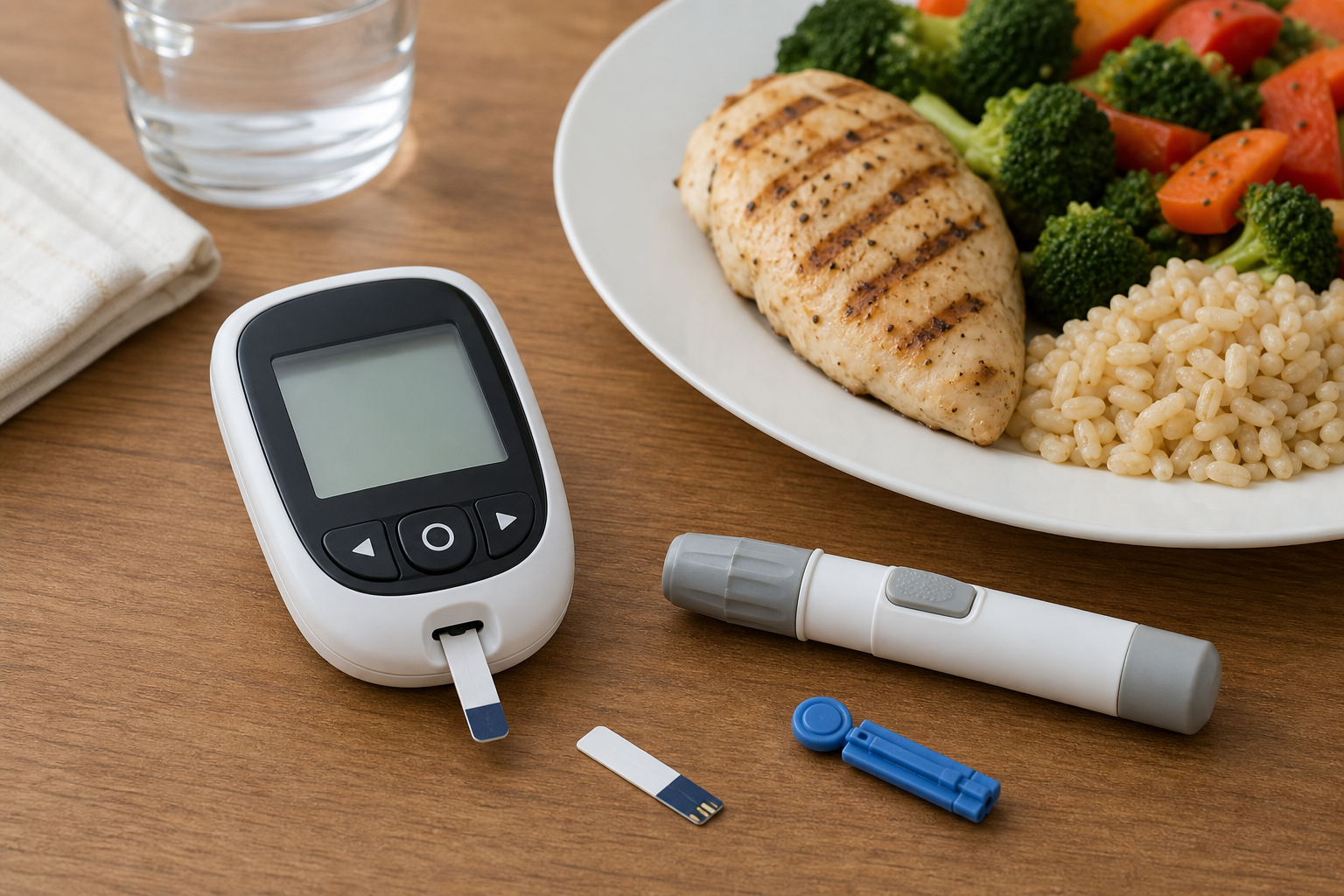
Used well, a home glucose monitor is one of the most actionable tools you have. Here's where it earns its place:
- Understanding your personal food responses. Checking before and after specific meals helps you see which foods send your sugar climbing and which don't—something no general dietary advice can tell you, because individual responses vary more than most people expect.
- Tracking the effect of exercise. Physical activity generally lowers blood sugar, but timing and intensity matter. Checking before and after a workout gives you real feedback on what works for your body.
- Catching unusual highs or lows quickly. If you feel shaky, foggy, or off, a reading can confirm whether you're dealing with a low that needs immediate attention.
- Building a log to share with your doctor. A week or two of consistent readings around meals gives your healthcare provider far more to work with than a single fasting number at an appointment.
The key word in all of this is consistent. Sporadic checking produces sporadic insight.
What Home Monitoring Can't Tell You
It can't give you your A1C. It can't assess kidney function, cholesterol, or the other markers your doctor monitors alongside blood sugar. It can't diagnose diabetes or prediabetes on its own. And it can't replace the clinical picture your healthcare team builds from lab work, your history, and your symptoms together.
This isn't a criticism of home monitors—it's just scope. A thermometer is a great tool for knowing if you have a fever. It's not a diagnosis of what's causing it.
Patterns That Are Worth a Call to Your Doctor
Most of the time, home readings are background data you track over time. But some patterns are worth flagging sooner rather than later:
- Consistently high fasting readings over several days that aren't explained by recent diet changes
- Readings that are significantly higher or lower than your usual range without an obvious reason
- Frequent post-meal readings that stay elevated well beyond two hours
- Symptoms of low blood sugar (shakiness, sweating, confusion) that keep recurring
- Any single reading that falls outside a range your doctor has already discussed with you as a threshold for contact
Your doctor has given you target ranges for a reason. When you're consistently outside them, that's the monitor doing exactly what it's supposed to do—flagging something that needs a clinical eye.
Getting the Most Out of Your Monitor
A few practical habits make home monitoring meaningfully more useful:
- Check at consistent times. Fasting (before breakfast), before meals, and one to two hours after meals are the most informative windows. Checking randomly gives you random data.
- Log the context, not just the number. What you ate, whether you exercised, how you slept, and your stress level all affect readings. A number without context is harder to act on.
- Use a monitor you'll actually use. Accuracy matters, but so does ease of use. If the device is cumbersome, you'll check less often, and consistency is what makes the data valuable.
- Bring your log to appointments. Many meters store readings or sync to an app. A two-week log is far more useful to your doctor than a verbal summary.
Your monitor is a tool—a genuinely good one when used with intention. It's not a report card, and a single reading isn't a diagnosis in either direction. The value is in the pattern, and the pattern is what you and your doctor use together to make decisions.
If you're looking for reliable glucose monitors and diabetes management supplies, Medistoreweb carries a range of diabetes and health monitoring devices with free shipping across the USA. Browse what's available and find the tools that fit your routine.
Frequently Asked Questions
How often should I check my blood sugar at home?
It depends on your situation and what your doctor has recommended. People on insulin often check more frequently than those managing with diet and oral medication alone. As a general starting point, checking fasting (before breakfast) and one to two hours after your largest meal gives you the most actionable information. Your healthcare provider can help you set a schedule that fits your specific management plan.
Can my home glucose readings predict my A1C?
Not precisely, but a consistent log of home readings can give you a rough sense of your average blood sugar trend. Some glucose meters and apps calculate an "estimated A1C" from your readings over time. These estimates are not a substitute for a lab A1C test, which is more accurate and accounts for factors your meter can't measure. Use it as a general indicator, not a final number.
Why does my blood sugar look fine in the morning but my A1C is still high?
Fasting readings only capture one slice of the day. If your blood sugar rises significantly after meals and stays elevated for several hours before coming back down, those post-meal spikes contribute to your overall average—which is what A1C reflects. Checking one to two hours after eating, not just in the morning, gives you a more complete picture of what's driving your A1C.
Does stress actually affect blood sugar readings?
Yes. Physical and emotional stress can trigger the release of hormones like cortisol and adrenaline, which signal the liver to release more glucose into the bloodstream. This means an unusually high reading on a stressful day isn't necessarily a sign that your diet or medication needs changing—but if high readings coincide with high-stress periods regularly, that's a pattern worth mentioning to your doctor.