


Most people with a bunion do the same thing: they search online, click the first result, and hope for the best. The problem isn't the shopping—it's that bunion pads and bunion splints are doing two entirely different jobs, and using the wrong one for the wrong situation means you're either still in pain by noon or wearing something to bed that isn't helping you the way you expected.
Here's the honest breakdown of what each type of product does, when it makes sense, and how to figure out what your feet actually need right now.
The Core Difference (And Why It Matters)
A bunion pad sits between your bunion and your shoe during the day. Its job is to absorb friction and cushion the bony bump so that every step doesn't feel like your foot is being pressed against sandpaper. It doesn't change the position of your toe—it just makes wearing shoes bearable.
A bunion splint is designed for nighttime. With no shoe compressing your foot, a splint can gently hold your big toe in a more aligned position while you sleep. The goal isn't instant pain relief the way a cushion is—it's reducing the pressure on the joint over time and slowing how quickly the bunion progresses.
Neither one is better. They're just built for different hours of the day.
When a Bunion Cushion Is What You Need
If your main complaint is that shoes hurt by mid-morning, you're dealing with a daytime friction and pressure problem. That's exactly what a cushion pad is designed for.
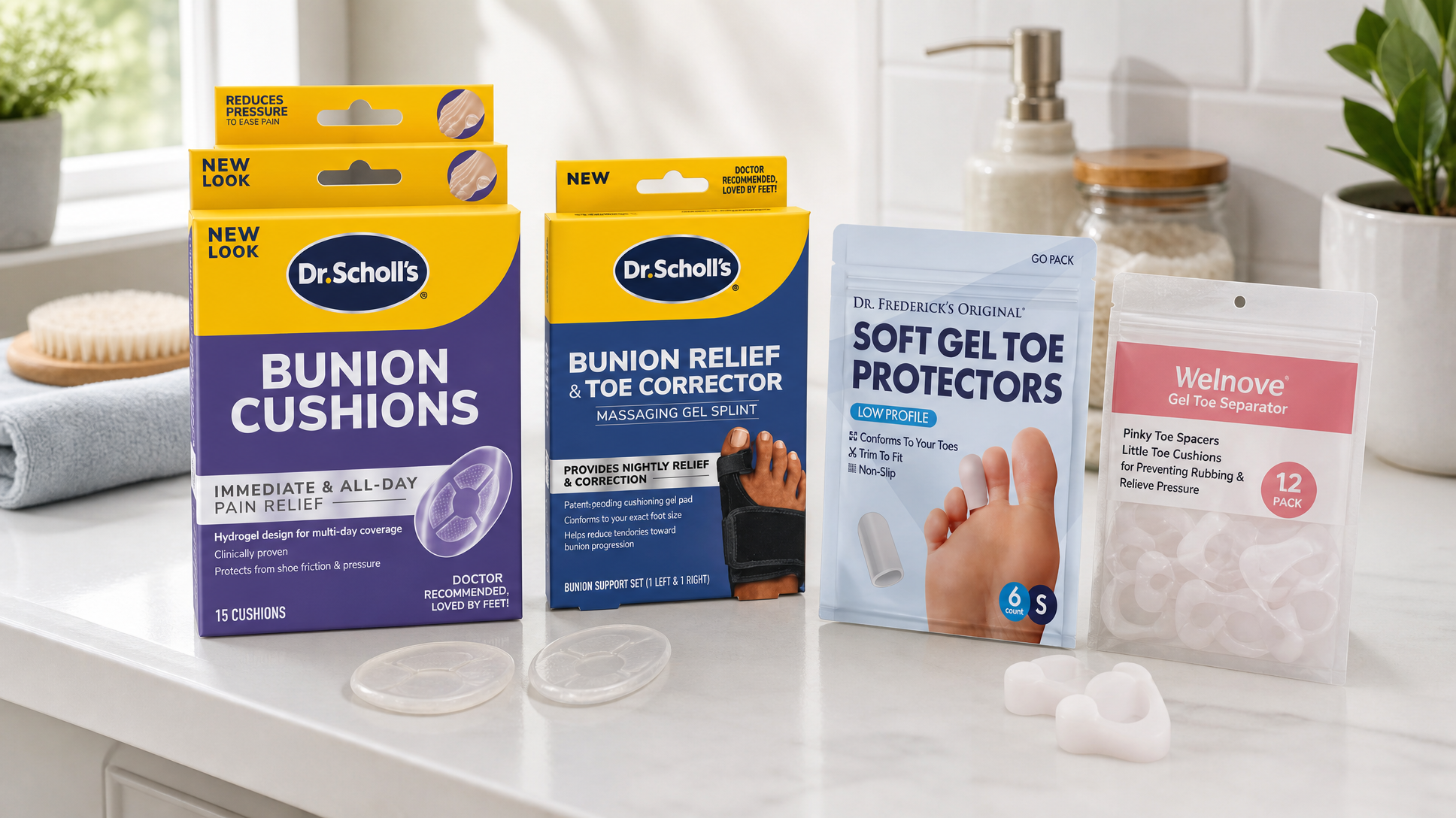
The Dr. Scholl's Duragel Bunion Cushion uses a hydrogel design that conforms to the shape of your bunion and sticks in place inside your shoe. The packaging is clear about what it does: it reduces pressure to ease pain and protects from shoe friction. It's clinically proven and doctor recommended—claims that are printed right on the box. Each box contains 5 cushions, and the hydrogel material is designed for multi-day coverage, so you're not replacing them every single morning.
This is the right starting point if:
- You're on your feet most of the day and need immediate relief inside shoes
- Your bunion is mild to moderate and mostly bothers you when walking or standing
- You want something discreet that works under socks and inside regular footwear
When a Splint Makes More Sense
If you've noticed your big toe drifting further toward your second toe over time, or if you wake up with stiffness and joint soreness even before you've put shoes on, nighttime support is worth adding.
The Dr. Scholl's Bunion Relief & Toe Corrector is a massaging gel splint designed for nightly wear. It comes as a set—one left, one right—and uses a patent-pending cushioning gel pad that conforms to your exact foot size. The packaging states it provides nightly relief and correction, conforms to your foot, and helps reduce the tendency toward bunion progression. It's a structured brace with adjustable straps, and from the photo, it's clearly built to stay in place while you sleep without being bulky or rigid in a way that would keep you awake.
This is the right fit if:
- You're concerned about your bunion getting worse and want to be proactive at night
- You already have a daytime cushion handling shoe friction, but want to add a second layer of care
- Your podiatrist has mentioned alignment or progression as something to watch
The Products That Fill the Gaps
Pads and splints cover the big picture, but bunion pain often comes with secondary irritation—toes rubbing against each other, smaller toes getting squeezed, or the skin on adjacent toes getting raw. Two other products are worth knowing about here.
Dr. Frederick's Original Soft Gel Toe Protectors
These are small, soft gel caps that slip over individual toes. The packaging shows they're low profile, conform to your toes, can be trimmed to fit, and are non-slip. Each "Go Pack" contains 6 pieces. They're not specifically a bunion product, but if your second or third toe is taking friction from the bunion shifting your big toe's position, a toe cap on the affected toe can make a real difference inside shoes.
Welnove Gel Toe Separator
These are soft gel spacers designed to sit between toes—specifically targeting the pinky toe and smaller toes that get crowded and rub. The pack of 12 gives you plenty to use and replace. If your bunion is pushing your big toe into your second toe, or if your smaller toes are getting compressed against each other, a spacer between them reduces that rubbing and relieves the pressure that builds up over a long day.
Think of these two as the supporting cast. The cushion handles the bunion itself; the toe protectors and spacers handle the collateral damage that bunions tend to cause on neighboring toes.
So Which Do You Actually Need?
Here's a simple way to think about it:
- Pain mostly during the day, inside shoes? Start with the Dr. Scholl's Duragel Bunion Cushion.
- Concerned about progression or waking up stiff? Add the Dr. Scholl's Bunion Relief & Toe Corrector for nights.
- Adjacent toes rubbing or getting sore? Pick up the Dr. Frederick's Soft Gel Toe Protectors or the Welnove Gel Toe Separators depending on whether it's the tip of the toe or the space between toes that's the issue.
- All of the above? Layer them. A cushion during the day, a splint at night, and a spacer or cap for the toes that are getting caught in the middle.
None of these products replace a podiatrist if your bunion is severe or causing significant joint pain. But for the everyday management that happens between appointments—or long before you ever need one—getting the right product for the right part of the day is the difference between a foot that functions and one that's just getting by.
Browse bunion cushions, splints, and toe protectors at Medistoreweb—free shipping on every order, and use code WELCOME5 for 5% off your first purchase.
Frequently Asked Questions
Can I wear a bunion cushion and a splint at the same time?
Not really—and you don't need to. Cushion pads are designed for inside shoes during the day, while splints are built for nighttime wear when your foot is bare. They're meant to work in sequence, not simultaneously. Use the cushion during waking hours and switch to the splint before bed.
How long do bunion cushion pads last before you need to replace them?
It depends on how much you're on your feet and the specific product. The Dr. Scholl's Duragel Bunion Cushion is designed for multi-day coverage, but adhesion and cushioning will degrade over time—especially if you're walking a lot or your feet sweat. Replace a cushion when it stops sticking securely or feels noticeably thinner.
Do bunion splints actually stop a bunion from getting worse?
Splints can help reduce the tendency toward bunion progression by holding the toe in a more aligned position during sleep—which is what the Dr. Scholl's Bunion Relief & Toe Corrector is designed to do. However, no OTC device can reverse an existing bunion. If your bunion is advancing quickly or causing significant pain, a podiatrist visit is the right next step.
Are gel toe separators the same as bunion pads?
No—they solve different problems. A bunion pad cushions the bony bump on the side of your foot against shoe friction. A gel toe separator sits between toes to prevent them from rubbing together, which is a secondary issue that bunions often cause as the big toe shifts toward its neighbors. Many people find they need both.