


The Label That Promises More Than It Delivers
You pick up a moisturizer, see the word "organic" on the front, and feel a small wave of relief. That's the whole point of the label—it's designed to make you feel like you've already done the hard work. But if you flip the bottle over and start reading the ingredient list, that relief can get complicated fast.
The truth is that "organic" on a personal care product in the US does not carry a single, standardized legal definition the way it does on a food label. A product can legally call itself organic if it contains just one or two certified organic botanical ingredients—even if the rest of the formula is made up of synthetic preservatives, fragrance compounds, or other ingredients you were trying to avoid in the first place.
That's not a reason to give up on cleaner personal care. It's a reason to shop smarter.
Why People Reach for Organic Skincare in the First Place
Most health-focused shoppers aren't chasing a trend. They have real, practical reasons:
- Sensitive or reactive skin that flares up with synthetic fragrance or certain preservatives
- A desire to reduce their overall chemical load, especially for products used daily
- Concerns about specific ingredients—parabens, sulfates, certain dyes—that they've read about or had reactions to
- A preference for formulas that lean on plant-derived ingredients over petroleum-derived ones
These are legitimate motivations. The problem isn't the goal—it's that the "organic" label has become a shortcut that doesn't always lead where you think it does.
What Certifications Actually Mean (and Which Ones Matter)
In the US, the USDA's National Organic Program certifies agricultural ingredients—not finished personal care products as a category. So when you see "USDA Organic" on a skincare label, it means the agricultural ingredients in that product meet organic farming standards. It says nothing about the synthetic ingredients that may also be in the formula.
Third-party certifications from organizations like COSMOS Organic or NSF/ANSI 305 go further—they evaluate the entire formulation, not just individual ingredients. A product carrying one of those seals has been through a more rigorous review. If certification matters to you, those are the logos worth looking for.
But here's the honest trade-off: certified-organic formulas sometimes have shorter shelf lives (because they avoid certain synthetic preservatives), can be more expensive to produce, and don't automatically outperform a well-formulated conventional product for your specific skin concern. Certification is a useful data point, not a guarantee of efficacy.
Ingredients Worth Seeking Out for Common Skin Concerns
Rather than chasing a label, it's more useful to know which plant-derived ingredients have a real track record for specific concerns. A few that show up consistently in well-regarded formulas:
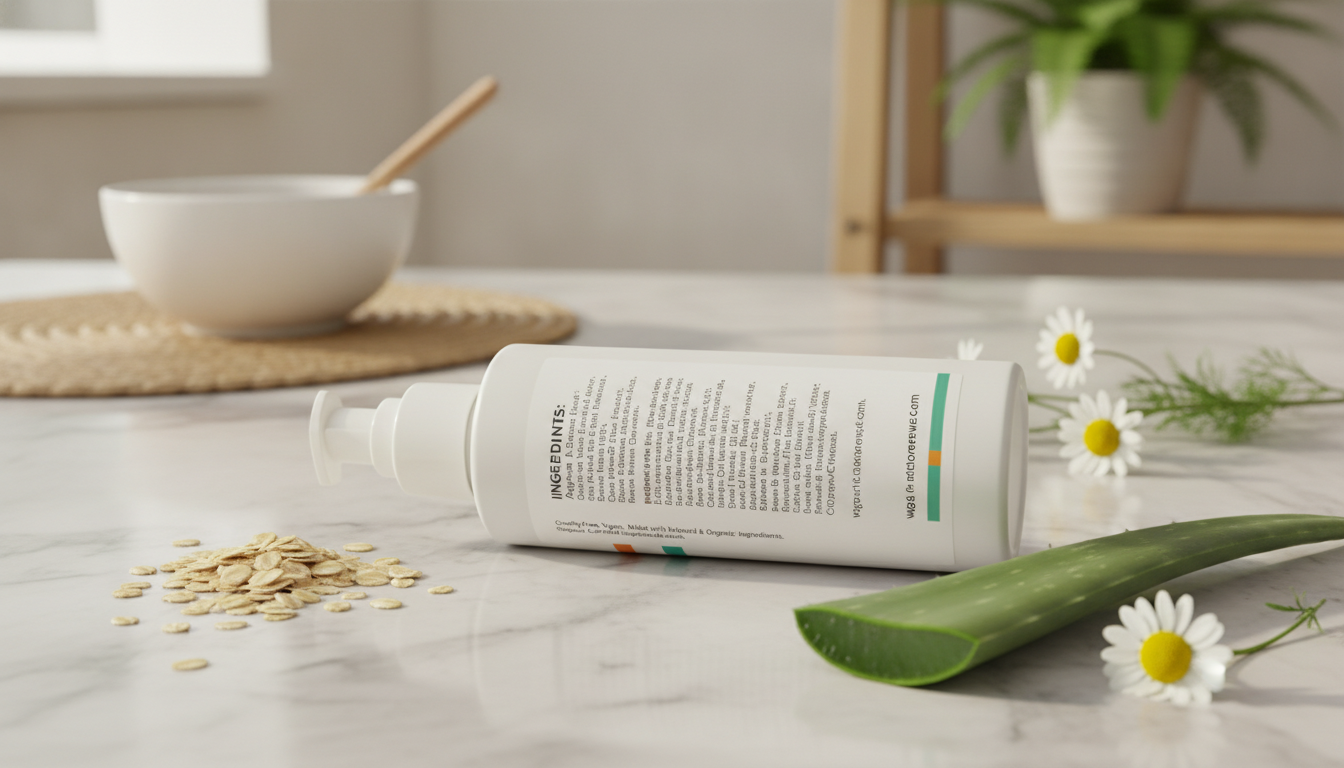
For dry or compromised skin: Shea butter, jojoba oil, and oat extract (colloidal oatmeal) are well-established emollients and barrier-support ingredients. Colloidal oatmeal, in particular, is an FDA-approved skin protectant—one of the few plant-derived ingredients to carry that designation.
For sensitive or reactive skin: Aloe vera, chamomile extract, and centella asiatica (also called cica) are commonly used for their soothing properties. Fragrance-free formulas—organic or not—tend to be the single biggest factor in reducing irritation for sensitive skin.
For uneven tone or texture: Rosehip seed oil contains naturally occurring vitamin A derivatives and fatty acids that many people find supportive for skin texture over time. Niacinamide (vitamin B3) is technically synthetic but extremely well-studied for tone and barrier function—worth knowing because a "cleaner" formula that skips it isn't automatically better.
The point isn't to memorize a list. It's to look at the actual ingredient panel and ask: does this formula contain things that are known to help my specific concern, regardless of whether the front label says "organic"?
The Mistake Most Shoppers Make at the Shelf (or the Scroll)
They read the front of the packaging and stop there. "Natural," "clean," "green," "plant-based," "non-toxic"—none of these terms are regulated in personal care. Any brand can use them freely. The back label is where the actual product lives.
A few practical things to check on the ingredient list:
- Where does fragrance appear? Even "natural fragrance" or "essential oil blend" can be a significant irritant. If you have reactive skin, fragrance-free is almost always the safer choice—regardless of whether the product is organic.
- What preservatives are used? Every water-based product needs a preservative to prevent microbial growth. Phenoxyethanol and ethylhexylglycerin are common in "cleaner" formulas and are generally considered low-risk. If a product claims to be preservative-free and contains water, be skeptical—that's actually a safety concern, not a selling point.
- What's the first ingredient? Ingredients are listed in descending order by concentration. If water (aqua) is first and a fancy botanical extract appears near the bottom, there's very little of that extract in the product.
When Organic Skincare Is Genuinely Worth It
There are real scenarios where choosing a certified-organic or predominantly plant-derived formula makes practical sense:
If you've identified a specific synthetic ingredient you react to—and the organic formula reliably avoids it—that's a concrete, personal reason to pay more for it. If you're managing a skin condition and your dermatologist has recommended avoiding certain preservatives or dyes, a more tightly formulated "clean" product may be easier to vet. And if you simply prefer to minimize synthetic ingredients in your daily routine on principle, that's a valid personal choice—just go in knowing it's a preference, not a proven health necessity for everyone.
What it's not: a substitute for treating a diagnosed skin condition, a guaranteed upgrade over every conventional formula, or a reliable signal of quality on its own.
How to Shop More Effectively for Personal Care Products
A few habits that actually move the needle:
- Define what you're trying to avoid—specifically. "Fewer chemicals" is too vague to shop by. "No synthetic fragrance" or "no parabens" gives you something concrete to check for.
- Use the ingredient list, not the front label. Get comfortable scanning the first five to seven ingredients—that's where most of the formula lives.
- Patch test anything new. Even genuinely natural ingredients can cause reactions in some people. Essential oils, nut-derived oils, and botanical extracts all have the potential to irritate sensitive skin.
- Buy from retailers with clear return policies. Skincare is personal. A hassle-free return window means you can try something new without the risk of being stuck with a product that doesn't work for you.
That last point matters more than it sounds. When you're experimenting with new personal care products—especially if you're managing sensitive skin—the ability to return something that doesn't work is a real safety net. Medistoreweb's personal care range comes with a 15-day hassle-free return policy and free shipping across the US, which makes it a lower-stakes place to try something new.
If you're also thinking about broader wellness habits—how skincare fits into a genuine health routine rather than just an aesthetic one—our post on building a self-care routine that's actually about health is worth a read. And if you're interested in how organic and natural product trends are evolving more broadly, our look at consumer trends shaping the organic industry adds useful context.
The Bottom Line
Organic skincare isn't a scam—but the label alone isn't a quality signal. The best personal care products for your skin are the ones formulated with ingredients that address your specific concerns, from a brand you can trust to be transparent about what's actually in the bottle. Read the back label. Know what you're looking for. And don't let the front of the packaging do your thinking for you.
Browse Medistoreweb's personal care and wellness range for quality products with free US shipping and a 15-day hassle-free return policy — so you can find what actually works for you, without the risk. Shop at Medistoreweb.
Frequently Asked Questions
Is "natural" skincare the same as "organic" skincare?
No—and the difference matters. "Natural" has no legal definition in US personal care, so any brand can use it freely. "Organic" has more structure behind it, particularly when a product carries USDA Organic certification on its agricultural ingredients, but even that doesn't regulate the full formula. Third-party certifications like COSMOS Organic evaluate the entire product and are a more meaningful signal if certified formulas are a priority for you.
Are organic skincare products safer for sensitive skin?
Not automatically. Some of the most common skin irritants—fragrance, essential oils, certain botanical extracts—are entirely natural in origin. For sensitive skin, the most reliable factor is usually a fragrance-free formula with a short, well-understood ingredient list, whether or not it's labeled organic. Always patch test a new product before applying it broadly, regardless of how clean the label looks.
Do organic skincare products expire faster than conventional ones?
They can. Formulas that rely on natural preservatives or avoid synthetic ones entirely may have a shorter shelf life than conventionally preserved products. Always check the period-after-opening symbol (the open jar icon with a number, like "12M") on the packaging, and store products away from heat and direct sunlight to extend their usable life.
How do I know if an organic skincare product is worth the price?
Look at the ingredient list rather than the label. Check whether the organic or plant-derived ingredients you're paying for appear high on the list (meaning they're present in meaningful amounts) and whether the formula addresses your specific skin concern. A higher price tag tied to a recognized third-party certification or a well-documented key ingredient is more justifiable than one tied purely to front-of-pack marketing language.