


You put on the bunion corrector for three nights, feel some relief, skip a few days because life got busy — and now you're wondering if you've wasted your effort. It's one of the most common frustrations with bunion care, and the confusion is understandable: nobody tells you what "consistent use" actually means in practice, or what you're really working toward.
Let's clear that up honestly, using the Dr. Scholl's Bunion Relief & Toe Corrector as the reference point — because it's a good example of what a nightly gel splint is and isn't designed to do.
What a Bunion Corrector Is Actually Doing While You Sleep
A bunion is a bony protrusion at the base of your big toe joint that develops gradually, often over years. A gel splint like the Dr. Scholl's Bunion Relief & Toe Corrector isn't reversing that bone structure — no OTC product can. What it is doing is gently holding the toe in a more aligned position while you rest, which takes pressure off the inflamed joint and may help reduce the tendency toward further progression over time.
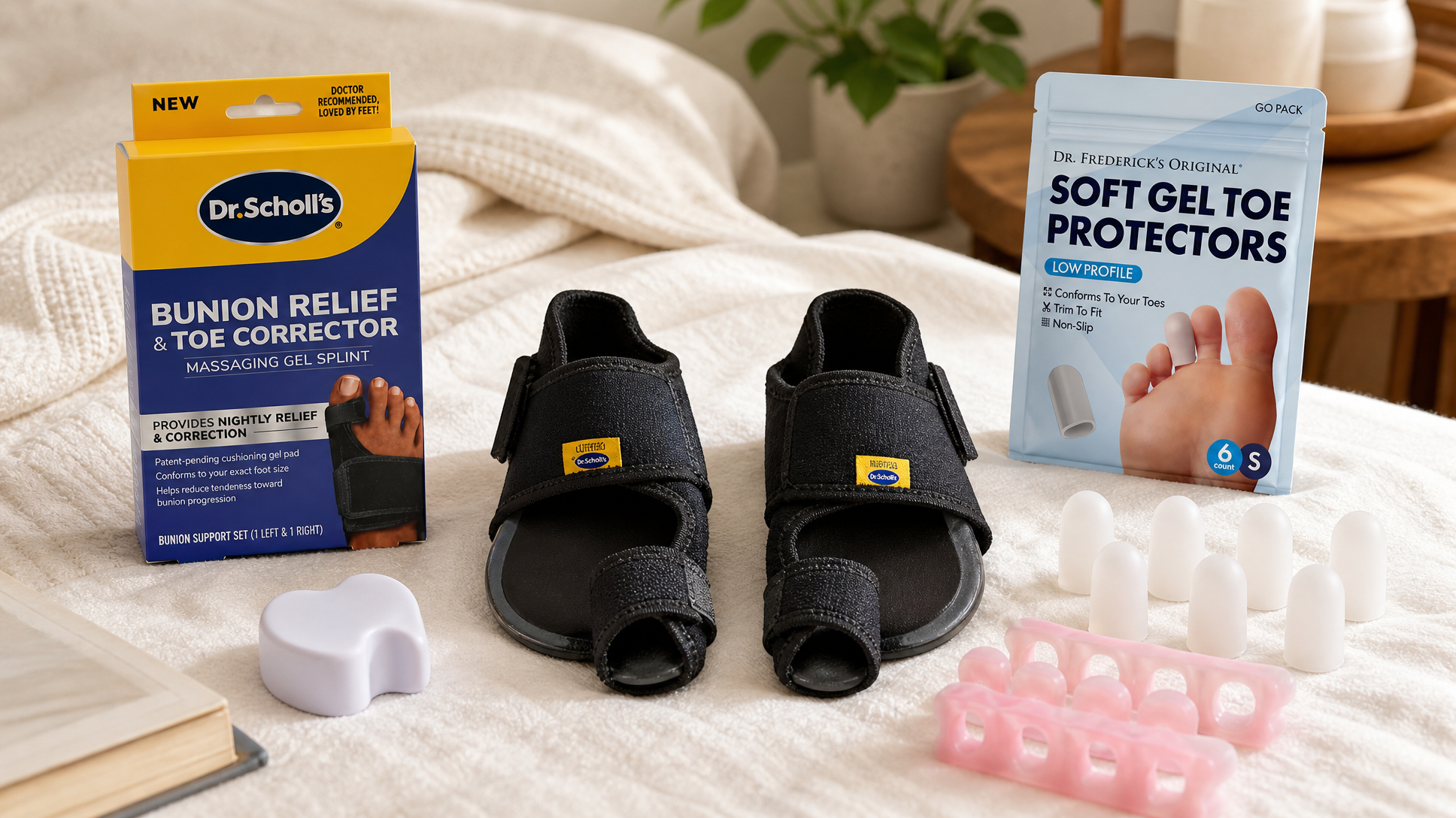
The Dr. Scholl's splint comes as a matched left-and-right set, with a black neoprene-style strap that wraps across the top of the foot and a gel pad that sits against the bunion itself. The packaging describes it as a massaging gel splint with a patent-pending cushioning gel pad that conforms to your exact foot size. That conforming fit matters — a splint that shifts around during the night isn't maintaining the gentle repositioning it's meant to provide.
So the goal isn't dramatic correction. It's consistent, low-level positional support during the hours when your foot isn't bearing weight — the only window when that kind of passive alignment work is even possible.
How Long Should You Actually Wear It?
The honest answer: longer than most people expect, and more consistently than most people manage.
Nightly use is the standard recommendation for this type of splint. That means wearing it each night as part of your wind-down routine, not just on nights when your foot hurts. The nights when it doesn't hurt are actually the most important ones — that's when the joint is calm enough to tolerate gentle repositioning without resistance.
As for how many weeks or months before you notice a difference: that varies by individual, by how far the bunion has progressed, and by how consistently you wear the splint. The packaging notes it's designed to help reduce the tendency toward bunion progression — which is a long-game benefit, not a two-week fix. Think of it less like a treatment with a defined end date and more like a nightly habit that supports your foot health over time.
A reasonable way to frame your expectations: aim for consistent nightly use for at least several weeks before evaluating whether you're getting any benefit. If your foot feels less aggravated during the day, that's a meaningful signal — even if the bunion itself looks the same.
What Happens If You Stop — or Skip a Few Nights?
Skipping a few nights won't erase your progress. The joint doesn't snap back to a worse position overnight. But bunion progression is driven by daily forces — the pressure of shoes, the mechanics of walking — and the splint's job is to offer a counterbalancing influence during rest. Stop wearing it and you lose that influence.
Think of it like this: if you stop wearing the splint for a week because you're traveling, you haven't undone anything. But if stopping becomes the default and wearing it becomes the exception, you're no longer getting the cumulative benefit it's designed to provide.
The practical takeaway: consistency matters more than perfection. Missing a night here and there is fine. Stopping for a month and expecting the same results is not.
Building a Realistic Wear Routine
The biggest reason people abandon bunion correctors isn't discomfort — it's forgetting. Here's what actually works:
- Keep it visible. Leave the splint on your nightstand or next to your toothbrush. Out of sight really is out of mind when you're tired at the end of the day.
- Put it on before you sit down for the evening. If you wait until you're already in bed, you're more likely to skip it.
- Start with shorter sessions if it feels unfamiliar. A new splint can feel strange the first few nights. Wearing it for a few hours before sleep, then building to a full night, helps your foot adjust.
- Track it loosely. A simple habit tracker — even a note on your phone — makes it easier to notice when you've drifted off the routine before a week has passed.
The Dr. Scholl's Bunion Relief & Toe Corrector is designed for nightly wear, so comfort during sleep is built into its design. The adjustable strap system means you can dial in the fit rather than fighting a one-size structure all night.
The Splint Is One Part of a Bigger Picture
A nightly corrector works best when it's paired with daytime protection — because the hours you spend on your feet are where the aggravation happens. That's where products like the Dr. Scholl's Duragel Bunion Cushion earn their place. The hydrogel cushions are designed for multi-day coverage, protecting the bunion from shoe friction and pressure throughout the day. Wearing a corrector at night and a cushion during the day gives the joint support across a full 24-hour cycle, rather than just a few hours of it.
For people whose secondary toes are also getting irritated — which often happens as the big toe drifts — a gel toe protector like the Dr. Fredericks Original Soft Gel Toe Protectors can shield individual toes from rubbing inside shoes. They're low-profile, trim-to-fit, and non-slip, so they stay put without adding bulk. And if the space between toes is part of the problem, the Welnove Gel Toe Separator spacers (available in a pack of 12) sit between toes to reduce direct contact and relieve the pressure that builds when toes crowd together.
None of these products replace each other — they address different parts of the same problem at different times of day. The corrector works while you rest. The cushion works while you're in shoes. The toe protectors and separators work wherever friction is happening. Used together, they cover more ground than any single product can.
You can also read our earlier post on bunion pads vs. splints if you're still deciding which type of support makes the most sense for your situation.
The Honest Bottom Line
A bunion corrector isn't a cure, and it won't deliver dramatic visible changes in a short time. What consistent nightly use of a well-fitted splint like the Dr. Scholl's Bunion Relief & Toe Corrector can do is reduce discomfort, support better toe alignment during rest, and help slow the progression that daily pressure would otherwise accelerate. That's a meaningful benefit — it just requires showing up for it most nights, not just when your foot is already hurting.
If you're ready to build that habit, shop the Dr. Scholl's Bunion Relief & Toe Corrector at Medistoreweb — doctor recommended, with free US shipping on your order.
Frequently Asked Questions
Can I wear a bunion corrector during the day, or only at night?
Most gel splints like the Dr. Scholl's Bunion Relief & Toe Corrector are designed for nightly wear — they're built to provide passive repositioning when your foot is at rest and not bearing weight. Wearing a bulky splint inside a shoe during the day isn't practical and can actually create new pressure points. For daytime protection, a low-profile bunion cushion worn inside your shoe is a better fit for the job.
How do I know if the splint is fitted correctly?
A well-fitted splint should feel snug but not tight — you shouldn't feel numbness, tingling, or significant pinching. The gel pad should sit directly over the bunion bump, and the strap should hold the toe gently in a more aligned position without forcing it. If the splint shifts significantly during the night, the strap likely needs adjustment. The Dr. Scholl's corrector includes a left and right splint specifically so each foot gets a properly oriented fit.
Will a bunion corrector make my bunion go away?
No OTC bunion corrector can reverse the underlying bone change — that's a structural issue that only surgery can address. What a nightly splint is designed to do is reduce discomfort, provide positional support during rest, and help reduce the tendency toward further progression. Think of it as maintenance and symptom management rather than a cure. If your bunion is causing significant pain or interfering with daily activity, a podiatrist visit is worth the time.
Do I need to use a bunion corrector and a bunion cushion, or will one of them do?
They serve different purposes at different times of day. A nightly corrector provides passive alignment support while you sleep. A daytime cushion like the Dr. Scholl's Duragel Bunion Cushion protects the joint from shoe friction and pressure while you're on your feet. Using both gives your foot support across more of the day — but if you can only start with one, the corrector addresses the alignment side while the cushion addresses the pain-during-activity side. Which matters more depends on when your discomfort is worst.