


Somewhere along the way, self-care got hijacked by marketing. Now it mostly means a shelf full of products that smell nice, photograph beautifully, and do approximately nothing for your actual health. The face mist stays misted. The jade roller collects dust. And the real stuff — tracking your blood pressure, getting enough sleep, managing that chronic ache in your lower back — keeps getting pushed to "I'll deal with it later."
This post is about the other kind of self-care. The kind that keeps your body functioning well, catches small problems before they become big ones, and fits into a real week without requiring a lifestyle overhaul.
Start With What Your Body Actually Needs Day to Day
Functional self-care isn't glamorous, but it's specific. Before building any routine, it helps to think in four categories: hygiene and feminine care, pain and discomfort management, health monitoring, and sleep and recovery. Most people are inconsistent in at least two of these — not because they don't care, but because no one ever laid them out as a system.
The goal here isn't perfection. It's building enough structure that these things happen by default, not by willpower.
Category 1: Feminine Care and Hygiene
This is the category that gets the most product attention and the least practical guidance. A solid feminine care routine isn't about buying the most premium option — it's about consistency and using the right product for your body at the right time.
Daily habits matter more than any single product: gentle, pH-appropriate cleansing, staying on top of your cycle with whatever menstrual care works for your body and lifestyle, and not ignoring symptoms (unusual discharge, persistent irritation, or irregular cycles) that your body uses to communicate something's off.
Monthly, it's worth doing a quick inventory: are you running low on supplies before your cycle? Are you using products that actually agree with your skin? Stocking up before you need to — rather than scrambling mid-cycle — is one of the lowest-effort upgrades you can make.
Category 2: Pain Management Before It Gets Worse
Most people manage pain reactively: they wait until it's bad enough to stop them, then reach for whatever's in the cabinet. A functional self-care routine flips that. It means keeping the right OTC pain relievers stocked, knowing which one you actually need (an anti-inflammatory for muscle soreness works differently than a general analgesic for a tension headache), and addressing recurring pain patterns rather than repeatedly masking them.
If you have a consistent pain point — a bad knee, tension headaches every Thursday, lower back stiffness after long desk days — that's worth treating as a category in your routine, not a random inconvenience. That might mean a topical pain reliever you apply after workouts, a heating pad built into your evening wind-down, or simply keeping a reliable OTC option stocked so you're not making a pharmacy run at 10 p.m.
The goal is to reduce the gap between "this is starting to bother me" and "I did something about it."
Category 3: Monitoring — The Habit Most People Skip
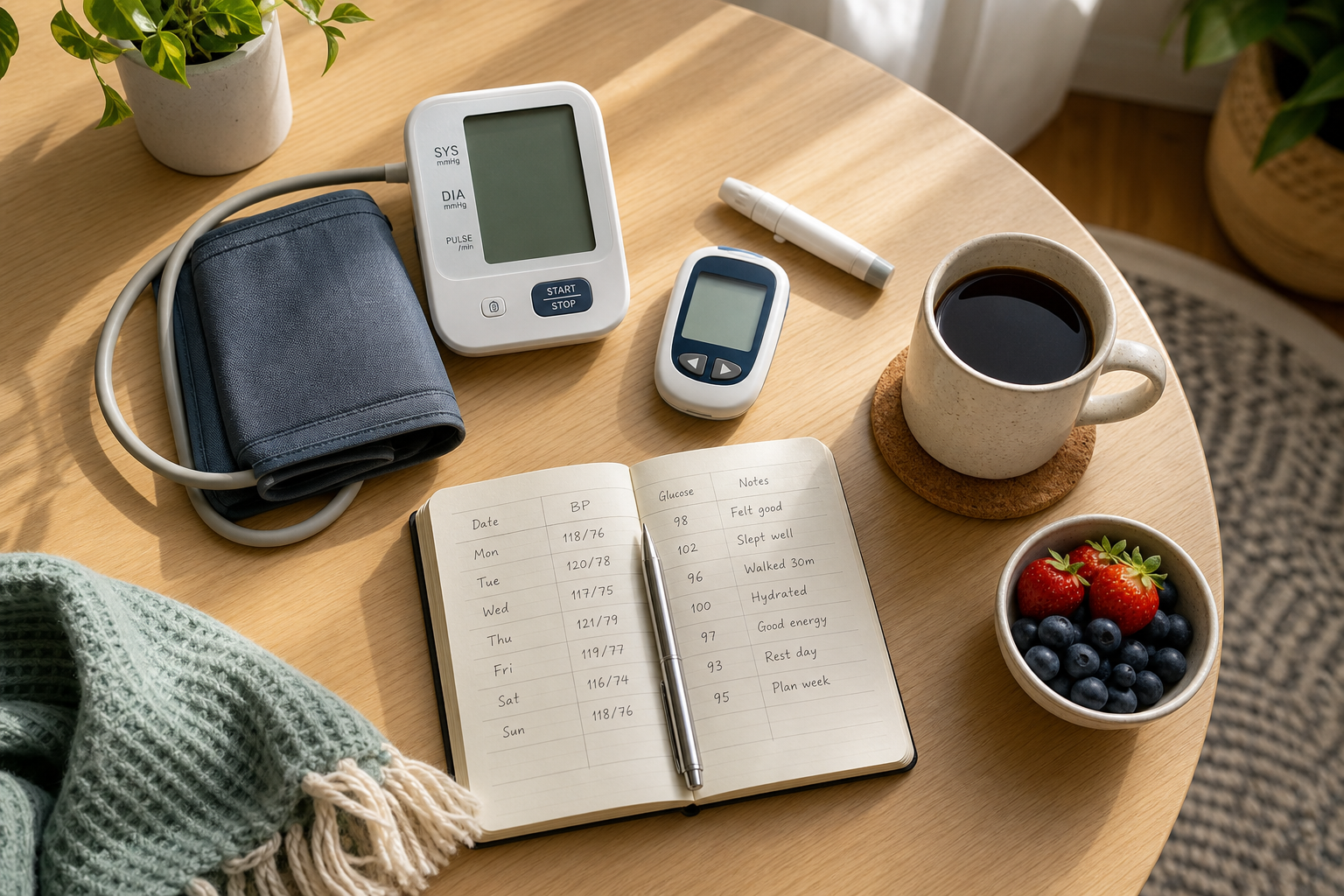
Health monitoring at home doesn't require a clinical setup. For most adults, it means three things: knowing your baseline numbers, checking them regularly enough to notice changes, and actually writing them down somewhere.
Blood pressure, blood glucose (especially if you have risk factors or a family history), and blood oxygen are the most common metrics worth tracking at home. The value isn't in any single reading — it's in the pattern over time. A blood pressure cuff that sits in a drawer tells you nothing. One you use every Sunday morning tells you a lot.
If you want a practical anchor for this habit, tie it to something you already do consistently. Sunday morning coffee. The first five minutes after you wake up. The same time you charge your phone. The monitoring device doesn't change your health — the habit of using it does.
For a deeper look at what home monitoring actually reveals (and where its limits are), this post on blood sugar spikes vs. high A1C is worth reading if glucose tracking is part of your picture.
Category 4: Sleep and Recovery
Sleep is the category where people know they're failing and feel the least equipped to fix it. The advice is always the same — consistent bedtime, no screens, cool room — and it's mostly right, but it ignores the practical friction points.
A functional approach to sleep self-care means removing the friction that keeps you from sleeping well, not just intending to sleep better. That might mean a nasal strip if congestion regularly wakes you up. A white noise option if you're a light sleeper. An OTC sleep aid during high-stress stretches, used intentionally rather than as a nightly crutch. Or simply treating the chronic pain or discomfort that's keeping you from settling down at night — which loops back to category two.
Recovery also means taking sick days seriously. Stocking cold and flu treatments before cold season, not during it, means you're not making decisions while you feel terrible. That's a small act of self-care that pays off every winter.
A Simple Weekly Framework
You don't need a daily ritual for all of this. Here's a structure that covers the essentials without turning health management into a part-time job:
- Daily: Feminine hygiene basics, any ongoing pain management, medication or supplement consistency
- Weekly: One blood pressure or glucose check (or both, if relevant), a quick inventory of what you're running low on, and a honest check-in on sleep quality that week
- Monthly: Restock what you've used, review any monitoring data for patterns worth noting, and schedule any appointments you've been putting off
That's it. Three tiers, each with a small, specific action. The monthly restock is the one most people skip — and it's the one that makes everything else easier, because you're never caught without what you need.
What to Actually Keep Stocked
A functional self-care setup isn't a medicine cabinet stuffed with things you might use. It's a short, deliberate list of things you will use, kept fresh and accessible. For most households, that includes:
- A reliable OTC pain reliever suited to your most common pain type
- Feminine care supplies in sufficient quantity (not "almost enough")
- At least one home monitoring device relevant to your health history
- A cold and flu treatment kit ready before you need it
- Any sleep or respiratory support that addresses your actual sleep disruptors
If you're setting up a home after a health event or discharge from care, the post-hospital supply checklist covers a more thorough version of this for higher-need situations.
The point isn't to have everything. It's to have what you actually use, and not run out of it.
The Reframe Worth Holding Onto
Self-care that works looks less like a morning ritual and more like a maintenance schedule. You don't think twice about keeping your car fueled or your phone charged — your body deserves the same matter-of-fact attention. Not because wellness culture told you to, but because catching a blood pressure trend early, sleeping through the night, and managing pain before it sidelines you are genuinely worth the small, consistent effort.
Everything on this list ships free to your door — explore Medistoreweb's Health & Daily Care and Women's Health categories to stock up on the essentials that make a functional self-care routine possible.
Frequently Asked Questions
How is a functional self-care routine different from a regular wellness routine?
A functional self-care routine focuses on practices and products that directly support your physical health — things like monitoring your blood pressure, managing pain before it worsens, and maintaining consistent hygiene habits. A general wellness routine often includes those things but can also drift toward aesthetic or feel-good practices that don't have a measurable health impact. The distinction is intent: functional self-care is about keeping your body working well, not just feeling relaxed.
How often should I actually check my blood pressure or blood glucose at home?
For most adults tracking these numbers as a general health habit, once a week at a consistent time is enough to start building a useful picture of your baseline. If you have a diagnosed condition or your doctor has given you specific guidance, follow that schedule instead. The key is consistency — same time of day, same conditions — so your readings are comparable over time.
What OTC pain reliever should I keep stocked at home?
That depends on your most common pain type. Anti-inflammatories (like ibuprofen) are generally better suited for muscle soreness, inflammation, and menstrual cramps. Acetaminophen is often preferred for general pain and fever when stomach sensitivity is a concern. It's worth having one of each on hand, and checking with your doctor or pharmacist if you have any conditions that affect which options are safe for you.
Is it worth building a self-care routine if I'm generally healthy?
Yes — arguably more so. Healthy people tend to skip monitoring and stocking up because nothing feels urgent, which means they're caught off guard when something does come up. A simple routine built around your current health (not a crisis) is much easier to maintain than one you're scrambling to build while you're sick, in pain, or managing a new diagnosis. Small, consistent habits are easier to sustain when they're not attached to stress.