


The gap between knowing and understanding
You've probably been told to eat more fiber at some point — by a doctor, a nutrition label, or a well-meaning article. But knowing you should eat more fiber and actually understanding why are two different things. And that gap matters, because when you understand what fiber does in your body, it stops feeling like a dietary obligation and starts feeling like a straightforward tool for feeling better day to day.
So let's close that gap.
What fiber actually is
Fiber is a type of carbohydrate found in plant foods — but unlike sugars and starches, your body can't fully digest it. It passes through your digestive system largely intact. That might sound like a flaw, but it's exactly what makes fiber useful.
There are two main types, and they work differently:
- Soluble fiber dissolves in water and forms a gel-like substance in your gut. This slows digestion, which helps with blood sugar stability and can support healthy cholesterol levels. You find it in oats, beans, apples, and citrus fruits.
- Insoluble fiber doesn't dissolve — it adds bulk to your stool and helps food move through your digestive tract more efficiently. Whole wheat, nuts, and most vegetables are good sources.
Most fiber-rich foods contain a mix of both types, so you don't need to obsess over the distinction. Eating a variety of plant foods naturally gets you both.
What fiber actually does in your body
This is where it gets interesting. Fiber isn't just about preventing constipation (though it genuinely helps with that). Its effects ripple through several systems.
Digestive health
Insoluble fiber keeps things moving. When your diet is consistently low in fiber, stools become harder and slower — which is uncomfortable and, over time, puts strain on your digestive tract. Adequate fiber keeps transit time healthy and reduces that sluggish, bloated feeling that comes from a low-fiber day.
Blood sugar management
Soluble fiber slows the absorption of sugar into the bloodstream. That means a fiber-rich meal produces a more gradual rise in blood sugar compared to the same meal without fiber. For anyone managing blood sugar — or just trying to avoid the energy crash after lunch — this is genuinely meaningful. If you're already monitoring your numbers at home, you might notice the difference a fiber-heavy breakfast makes. For more on home monitoring, our post on blood sugar spikes vs. high A1C covers what your readings actually tell you.
Gut microbiome support
Certain types of soluble fiber — sometimes called prebiotic fiber — feed the beneficial bacteria living in your gut. A well-fed microbiome is increasingly linked to better immune function, mood regulation, and reduced inflammation. Your gut bacteria are essentially farming fiber for fuel, and they thrive when you give them enough of it.
Satiety
High-fiber foods take longer to eat, take up more space in your stomach, and slow the rate at which your stomach empties. The practical result: you feel full longer. That 4 p.m. snack craving that hits every day? It's often a signal that lunch didn't have enough fiber or protein to sustain you.
Which foods are genuinely high in fiber
A lot of foods get marketed as high-fiber when they barely move the needle. Here's an honest look at the real sources:
Legumes
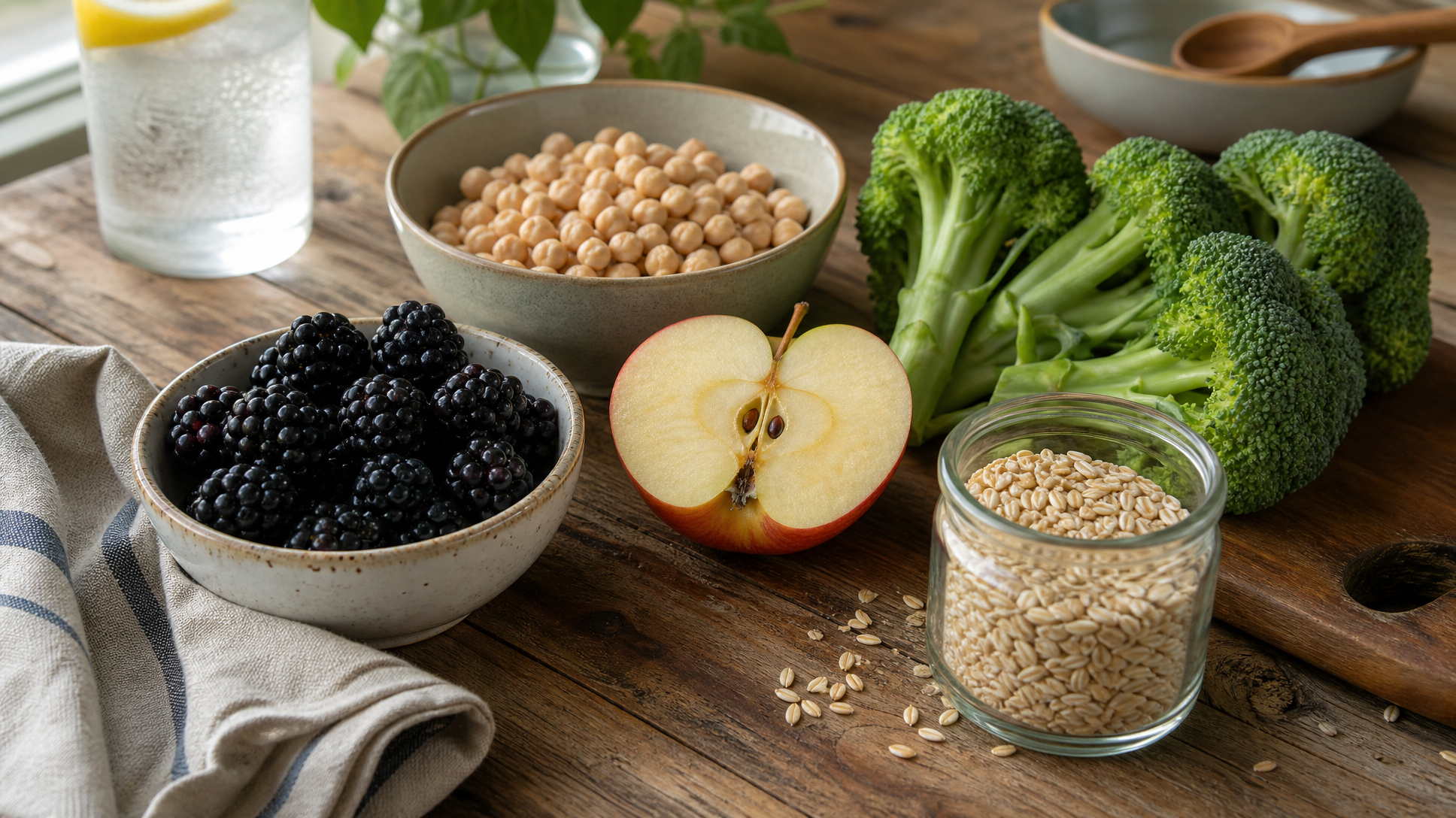
Beans, lentils, chickpeas, and split peas are the most fiber-dense foods most people have easy access to. A cup of cooked lentils delivers a substantial amount of fiber — more than most people get in an entire day from other sources. They're also cheap and versatile. If you're not eating legumes regularly, this is the single biggest lever you can pull.
Whole grains
Oats, barley, whole wheat bread, brown rice, and quinoa all contain meaningful fiber — but the key word is whole. Refined grains (white bread, white rice, most crackers) have had the fiber-containing bran stripped away. Swapping refined grains for whole grains across your meals adds up significantly over a week.
Vegetables
Broccoli, Brussels sprouts, carrots, artichokes, and leafy greens are solid sources. Starchy vegetables like sweet potatoes and peas deliver even more. The general rule: the more colorful and varied your vegetable intake, the better your fiber coverage.
Fruits
Berries are standouts — raspberries and blackberries in particular are among the highest-fiber fruits you can eat. Apples (with the skin), pears, and avocados are also genuinely good sources. Fruit juice, by contrast, has had most of the fiber removed. Eat the fruit, skip the juice if fiber is your goal.
Nuts and seeds
Chia seeds, flaxseeds, and almonds are worth highlighting. Chia seeds in particular are unusually fiber-dense for their size — a small amount added to oatmeal or yogurt makes a real difference. Ground flaxseed is easy to stir into almost anything.
What to expect when you actually eat more fiber
Here's the honest version: if you dramatically increase your fiber intake overnight, you'll likely feel bloated and gassy for a week or two. This is normal — your gut bacteria need time to adjust. The fix is to increase fiber gradually over several weeks and drink more water alongside it. Fiber absorbs water, and without adequate hydration, it can actually make constipation worse rather than better.
Once your gut adapts, most people notice more regular digestion, steadier energy levels through the day, and less of that heavy, sluggish feeling after meals. These aren't dramatic overnight changes — they're the kind of consistent, low-key improvements that compound over weeks and months.
A few things fiber can't do
It's worth being honest here. Fiber is genuinely useful, but it's not a cure-all. It won't replace medical treatment for digestive conditions, and it won't single-handedly fix blood sugar if other dietary and lifestyle factors are working against you. Think of it as one reliable pillar of a practical health routine — not a magic fix, but a consistent contributor.
If you're managing a chronic condition, it's worth discussing dietary changes with your healthcare provider, especially if you're also using monitoring devices or medications where timing and food intake interact.
Building the habit without overhauling everything
You don't need to redesign your entire diet. Three practical shifts that most people can make without much friction:
- Swap your breakfast grain. If you eat cereal or toast, switch to oatmeal or whole grain bread. Done consistently, this alone makes a noticeable difference.
- Add legumes to two meals a week. Toss chickpeas into a salad, stir lentils into soup, or use black beans as a base. You don't need to eat them every day to benefit.
- Keep the skin on fruits and vegetables. The skin is often where the fiber concentration is highest. Peeling apples, cucumbers, and potatoes removes a meaningful portion of the fiber.
Small, repeatable changes beat ambitious overhauls that last three days.
Supporting your health day-to-day goes beyond diet — it's about having the right tools and products on hand when you need them. Browse wellness and daily health essentials at Medistoreweb — a one-stop online health store with free US shipping across medical supplies, wellness products, and personal care essentials. First-time shoppers can use code WELCOME5 for 5% off their first order.
Frequently Asked Questions
How much fiber do adults actually need per day?
General dietary guidance from health authorities in the US recommends roughly 25 grams per day for adult women and around 38 grams for adult men, though most Americans fall well short of these targets. Rather than obsessing over an exact number, focus on consistently including legumes, whole grains, vegetables, and fruits across your meals — the numbers tend to follow.
Can you get too much fiber?
Yes, though it's uncommon from whole foods alone. Eating very large amounts of fiber — particularly through supplements — without adequate water intake can cause bloating, gas, cramping, and in some cases constipation rather than relief. If you're adding fiber supplements to your routine, start with a low dose and increase slowly while staying well hydrated.
Are fiber supplements as effective as fiber from food?
Fiber supplements can help close a gap, but they're not a full substitute for food-based fiber. Whole foods deliver a mix of soluble and insoluble fiber alongside vitamins, minerals, and phytonutrients that supplements don't replicate. Supplements are a useful backup — particularly for people with restricted diets — but real food sources should be the foundation.
Does cooking vegetables reduce their fiber content?
Cooking softens the cell walls of vegetables, which can make them easier to digest, but it doesn't significantly reduce total fiber content. You're not losing meaningful fiber by steaming or roasting your vegetables. The bigger factor is whether you're eating the skin (where applicable) and choosing whole vegetables over heavily processed versions.